Guide · First 2 weeks
Umbilical cord care.
The stump will look alarming. It will go from yellowish to brown to black, it will shrink and harden, and then one day it will simply drop off. All of that is normal. Your job is smaller than you think: keep it clean, keep it dry, and leave it alone.
Signs of cord infection, come in today
Cord infection in a newborn can move to the bloodstream quickly. These signs do not wait until the clinic is convenient.
- Redness spreading onto the skin of the belly around the cord
- Pus, or discharge that is yellow, green or thick
- A foul or offensive smell
- The skin around it feels hot, or the baby cries when it is touched
- Bleeding that does not stop with gentle pressure
- Fever, or a baby who feels unusually cold
- Feeding poorly, very sleepy, floppy or irritable
- A lump or swelling at the navel that is tender or discoloured
The four steps
That is genuinely all of it. Tap through the steps, or press play and watch them.

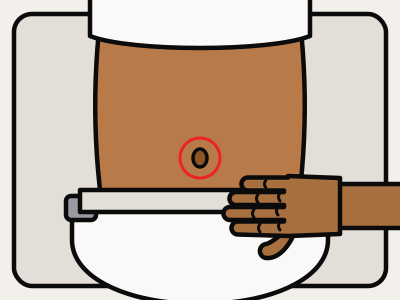
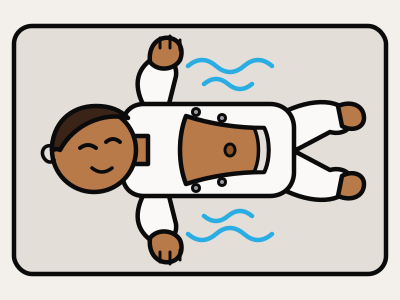

What not to put on it
This is where most harm happens, and almost always with loving intentions. Nothing goes on the stump unless a clinician has told you to use it by name.
- No hot compresses or heated cloths. This is common advice from older relatives and it causes burns.
- No powder, ash, cow dung, palm oil, toothpaste, engine oil or herbal preparations. Substances like these are a leading cause of newborn tetanus and cord infection in Nigeria.
- No methylated spirit unless you were specifically told to use it. Routine spirit dries the skin and delays separation.
- No bandage or plaster over it. It needs air.
- Do not pull it, even when it is hanging by a thread. It comes away on its own.
Chlorhexidine. Some babies in Nigeria are prescribed 7.1% chlorhexidine gel for the cord, particularly after a birth outside a hospital. If you were given it, use it exactly as instructed. If you were not, do not buy it and start on your own — ask us first.
What normal looks like
- The stump darkens from yellow-green to brown to black over several days.
- It shrinks, hardens and may twist.
- It smells slightly — dry and musty, not foul.
- A few drops of blood or a little sticky yellowish fluid when it separates.
- It falls off somewhere between five and fifteen days. Later than that is usually still fine, but mention it at your next visit.
- A small red or moist patch underneath for a day or two after it drops off.
You can bathe your baby normally. There is no need to keep the stump dry at all costs during a bath, just dry it properly afterwards rather than leaving it damp inside clothing.
Common questions
It smells. Is that infection?
A faint dry, musty smell is normal as the stump dies off. A strong, foul, offensive smell, especially with any discharge or redness, is not. If you are having to decide which one it is, that is reason enough to have someone look.
There was blood on the vest.
A few spots as it loosens or separates is expected. Blood that keeps coming, soaks through, or restarts after gentle pressure is not — bring the baby in.
It has been three weeks and it is still on.
Usually it just means it is taking its time, and it is more common when the cord was thick. Mention it at your next visit. Bring it forward if there is any redness, discharge or smell, or if your baby seems unwell.
It fell off and there is a small wet pink lump.
A little moisture and pinkness for a few days is usual. A lump that persists, weeps, or bleeds easily should be looked at — it is usually something minor and easily treated, but it needs seeing rather than guessing.
Can I bath my baby before it falls off?
Yes. Bath normally, then dry the stump well. The old advice to avoid water entirely is no longer what we recommend.
My mother-in-law insists on applying something. What do I say?
Tell her the hospital asked you to keep it dry and put nothing on it, and that you will be asked about it at the next visit. If it helps, bring her with you and let us have that conversation instead, we have it often and nobody leaves offended.
Next
Other guides for new mums.
Counting breathing
A 60-second counter and the numbers that mean fast breathing.
Count with meChanging a nappy
Six animated steps, including the two that prevent nappy rash.
Watch the stepsInfection control
Handwashing that works, and how to handle visitors.
Read the guideSafe Motherhood
The full clinical pathway from booking to postnatal review.
Read moreIf it looks wrong, we would rather see it.
If this is an emergency, do not message or book — come straight in, or go to the nearest emergency department. Do not drive yourself. Call +234 809 016 0175.