Guide · Every day, many times
Changing a nappy.
You will do this somewhere around two thousand times in the first year, so it is worth ten minutes now to learn the two steps most people skip, the ones that decide whether your baby gets nappy rash or doesn't.
Have your baby seen
- Fewer than six wet nappies a day after day five
- No urine at all for 12 hours
- Still passing black meconium after day four
- Stool that is white, chalky or pale grey
- Blood in the stool or urine
- Watery stools many times a day, or any diarrhoea in a newborn
- A rash that is raw, blistered, bleeding, or has spots spreading beyond the nappy area
- A rash with fever, or one not improving after three days of good nappy care
Before you start
Get everything within arm's reach first — clean nappy, cotton wool or a soft cloth, clean warm water, a towel, a change of clothes, and a bag for the dirty one. Never leave your baby alone on a raised surface, not even for a second. Newborns roll sooner than anyone expects them to. If you have to walk away, take the baby with you or put them on the floor.

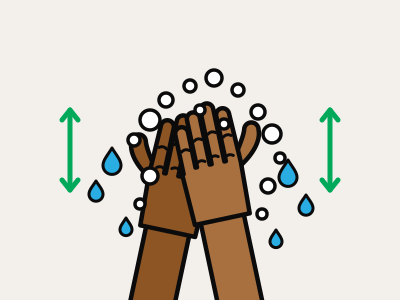
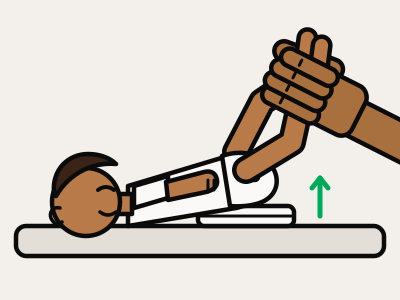
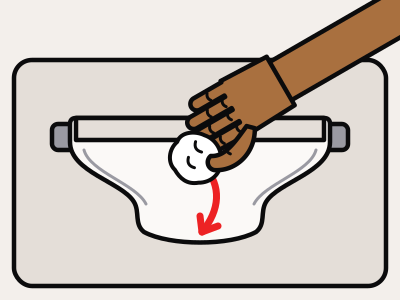
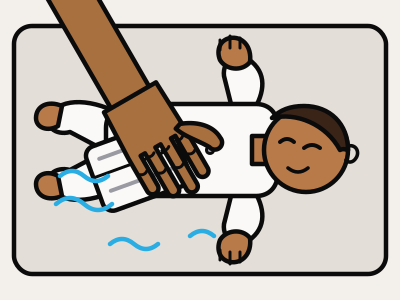

Preventing nappy rash
Nappy rash is caused by skin sitting against wet. Almost everything that prevents it comes down to less time wet and more time dry.
- Change often: a newborn may need it every two to three hours, and straight after any stool.
- Dry properly before the new nappy goes on. Pat, do not rub.
- Air time. A few minutes on a towel with no nappy at all, once or twice a day, does more than any cream.
- A barrier cream: zinc oxide or petroleum jelly, on clean dry skin if the area gets red.
- Plain water and cotton wool for newborns. If you use wipes, choose fragrance-free and alcohol-free ones.
- Avoid talcum powder. It cakes in the creases and babies can breathe it in.
What the nappy tells you in the first week
Nappies are the main way you know feeding is going well, which is why the ward asks about them constantly.
| Day | Wet nappies | Stool |
|---|---|---|
| Day 1 | At least 1 | Black, sticky, tar-like (meconium) |
| Day 2 | At least 2 | Still dark, softening |
| Day 3 | At least 3 | Greenish-brown, changing |
| Day 4 | At least 4 | Yellow, looser |
| Day 5 onwards | 6 or more | Soft, mustard-yellow, often seedy |
Breastfed babies may stool at every feed or, after the first weeks, go several days without one — soft stool when it comes is what matters, not the frequency. A brick-red or orange dust in the nappy in the first days is usually urate crystals and is common, but tell us if it continues past day three.
Common questions
How often should I change at night?
If the nappy is only wet and your baby is sleeping soundly, you can usually leave it until the next feed. Stool always gets changed straight away, even if it means waking them.
Cloth or disposable?
Either works. Cloth costs less over time and needs changing more often because it holds damp against the skin; disposables wick better but cost more. Rash comes from being left wet, not from the type of nappy.
My baby screams through every change.
Very common, and usually about being cold and on their back rather than pain. Warm your hands, keep the room warm, keep up a running commentary, and be quick. If they seem to hurt specifically when the hips or legs are moved, mention that to us.
There is a little blood in my baby girl's nappy.
A small amount of vaginal bleeding in the first week is common and harmless, it is your hormones leaving her system. Anything heavier, or bleeding after the first week, should be checked.
Should I pull back my son's foreskin to clean it?
No. It is normally attached at this age and forcing it causes injury and scarring. Wash the outside only. It separates on its own, often not until several years in.
Next
Other guides for new mums.
Umbilical cord care
Clean, dry, and the four signs that mean come in today.
Read the guideCounting breathing
A 60-second counter and the numbers that mean fast breathing.
Count with meInfection control
Handwashing that works, and how to handle visitors.
Read the guideAsk a question
Real questions from Nigerian mums, answered properly.
Browse questionsA rash that is not settling should be seen.
If this is an emergency, do not message or book — come straight in, or go to the nearest emergency department. Do not drive yourself. Call +234 809 016 0175.