Guide · First 8 weeks
Infection control, without turning your home into a hospital.
A newborn's immune system is not finished. For the first two months, an infection that would give you a mild cold can put your baby in hospital. Almost all of the protection comes from one unglamorous thing, clean hands, and from being willing to say no to people you love.
Signs of infection in a newborn, come in now
Babies under two months do not show infection the way older children do. There may be no fever at all. Trust the change in behaviour.
- Fever, or unusually cold to touch
- Feeding poorly or refusing feeds
- Very sleepy, floppy, or hard to wake
- Unusually irritable, or a high-pitched cry
- Fast or difficult breathing, grunting
- Vomiting everything, or a swollen belly
- A rash, or redness and discharge around the cord or eyes
- Yellow skin or eyes
- Fewer wet nappies than usual
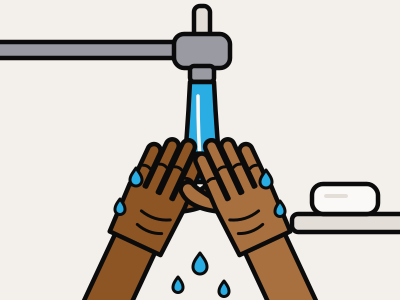
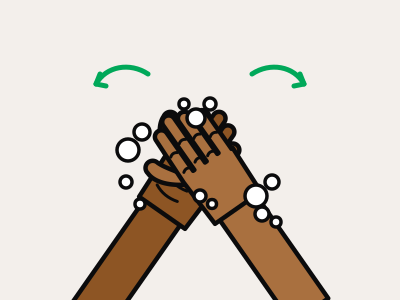
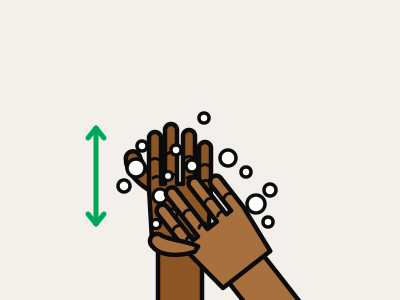
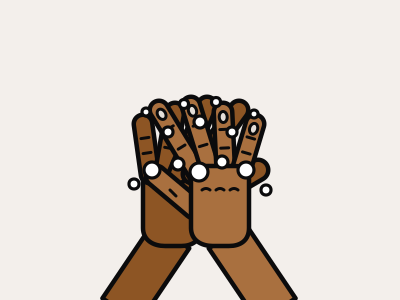
Washing hands properly
Most people wash for about six seconds and miss their thumbs, fingertips and the backs of their hands entirely. Those are exactly the parts that touch a baby. The whole thing should take about as long as singing Happy Birthday twice.
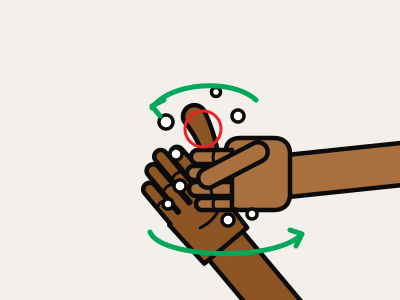
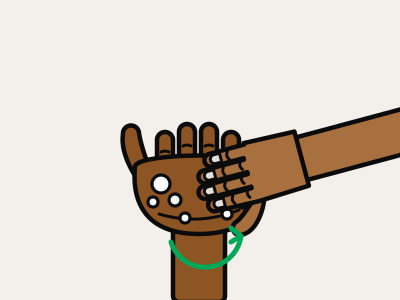
When hands must be washed
- Before picking up or feeding the baby — every time, everyone.
- After every nappy change.
- After using the toilet.
- After coming in from outside, from the market, or from work.
- After handling money, your phone, raw meat or animals.
- Before expressing breast milk or handling bottles.
- After coughing, sneezing or blowing your nose.
Hand sanitiser with at least 60% alcohol is a good substitute when there is no water, but not when hands are visibly dirty, and it does not work against every organism. Water and soap first wherever possible.
Visitors: the conversation nobody wants to have
A new baby brings visitors, and turning people away feels rude. You are not being rude — you are protecting your baby, and the people who matter will understand once you say it out loud. Some things that make it easier:
- Put it on someone else. "The hospital asked us to keep visitors small for the first six weeks" ends most arguments instantly.
- Hands at the door. Soap and a clean towel by the entrance, and ask everyone as they come in. Making it the house rule means nobody is singled out.
- Anyone unwell waits. A cough, a cold, a fever, a cold sore, a rash, diarrhoea — they come back next week. Whooping cough and RSV look like an ordinary cold in an adult and are serious in a newborn.
- No kissing the face or hands. Especially not by anyone with a cold sore. Babies put their hands in their mouths.
- Ask about vaccination. Adults in close contact ideally have up-to-date whooping cough and flu cover. Ask us if you want to arrange it.
- Smokers outside, and a change of top before holding the baby.
- Keep it short and few. The first two weeks are for recovering and feeding.
Feeding equipment
- Wash bottles, teats and pump parts in hot soapy water, with a bottle brush, immediately after use.
- Sterilise by boiling for at least five minutes, or by steam or cold-water sterilising solution, for the first twelve months.
- Make up formula fresh for each feed. Do not keep a made-up bottle warm waiting for the baby to want it.
- Throw away what is left in a bottle after a feed rather than saving it.
- Expressed breast milk keeps about four hours at room temperature in Abuja's heat, and up to four days in the back of a fridge that stays properly cold. Label it with the time.
Around the home
- A mosquito net over the cot, every night. Malaria in a newborn is severe.
- Clean water for everything that touches the baby's mouth.
- Change your own pads frequently and wash your hands afterwards, your recovery matters too.
- Keep the cord stump clean and dry — see cord care.
- Anyone employed to care for your baby or handle food should be screened. Nanny and food handler screening is ₦30,000.
Common questions
Do I really have to stop people kissing the baby?
Yes, on the face and hands, for the first couple of months. Cold sores carry herpes simplex, which is usually trivial in an adult and can be devastating in a newborn. Most people simply do not know this, telling them is a kindness.
My relative is offended.
Let us be the ones who said it. Tell them the hospital's instruction was six weeks of small, well visitors, and bring them to your next appointment if they want to hear it from us. We are used to it.
Is antibacterial soap better?
No. Ordinary soap, used properly for long enough, does the job. The technique and the duration matter far more than the product.
Should I sterilise everything in the house?
No. Feeding equipment and dummies, yes. Everything else just needs ordinary cleanliness. A home that is scrubbed sterile is not achievable and not the point, hands are what actually carry infection to a baby.
I have a cold. Should I stay away from my own baby?
No, you cannot and should not. Wash your hands before every contact, wear a mask while feeding and holding, avoid kissing the face, and keep breastfeeding. Your milk is actively making antibodies against the thing you have.
Next
Other guides for new mums.
Umbilical cord care
Clean, dry, and the four signs that mean come in today.
Read the guideCounting breathing
A 60-second counter and the numbers that mean fast breathing.
Count with meChanging a nappy
Six animated steps and what the nappy tells you about feeding.
Watch the stepsEating well
A monthly theme built on food from an Abuja market.
This monthIf your baby is unwell, do not wait it out.
If this is an emergency, do not message or book — come straight in, or go to the nearest emergency department. Do not drive yourself. Call +234 809 016 0175.