Guide · Only if prescribed
Using a nebuliser at home.
A nebuliser turns liquid medicine into a mist your child breathes in. It is a delivery device, not a treatment in itself — what goes in it, how much, and how often are decisions for the clinician who prescribed it, not for a pharmacy counter or a neighbour with a spare machine.
A nebuliser is not a rescue for severe breathing trouble
If your child is struggling to breathe — skin pulling in under the ribs, grunting, blue lips, too breathless to talk or feed, or drowsy — do not stay home and nebulise. Come in, or go to the nearest emergency department. Give the prescribed reliever on your way if you have been told to, but do not let it delay you.
Call +234 809 016 0175Setting it up
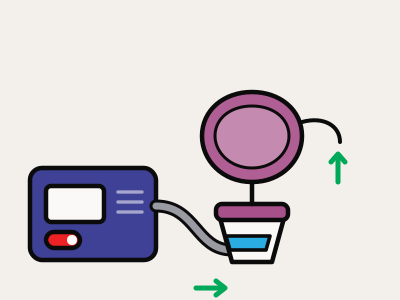
Do this somewhere with a clean flat surface and a socket, with your child sitting upright. Upright matters — lying down, much less of the mist reaches the lungs.
Getting a frightened child to keep the mask on
- Do it before they are exhausted. A tired, distressed child fights harder.
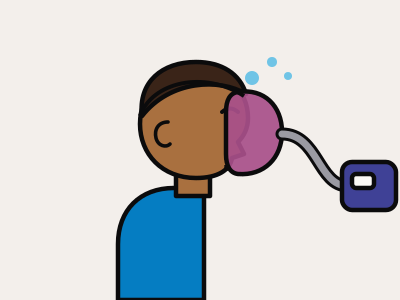
- Hold them on your lap, facing outward, mask held against the face rather than strapped tight.
- Distract properly: a phone screen, a song, a story. Ten minutes of screen time to get a treatment in is a fair trade.
- Let them hold the mask if they are old enough. Control helps.
- Never "blow-by": holding the mask a few centimetres away because they are crying. Almost none of the medicine gets in. A sealed mask on a crying child is better than a loose one on a calm child.
- Practise when they are well. Let them put the mask on a doll. The first time should not be during an attack.
Cleaning and keeping it safe
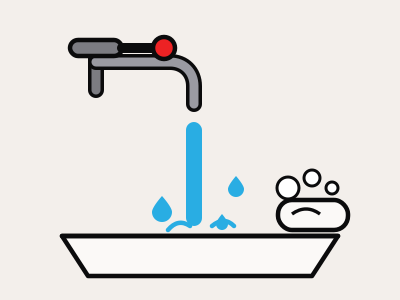
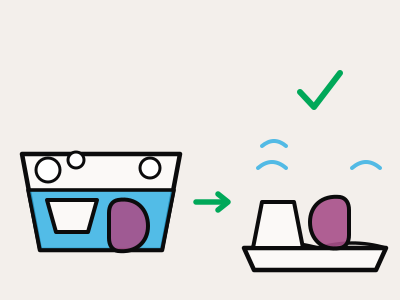
- Wash the cup and mask after every use; air dry completely.
- Disinfect with steam, and follow whatever else your device’s manufacturer specifies. Usually weekly.
- Do not wash the tubing. Water trapped inside cannot dry and will breed organisms. Replace it instead when it looks cloudy or damp.
- Replace masks and cups on the schedule the manufacturer gives. They are consumables.
- Store assembled parts in a clean dry bag or box, not loose in a drawer.
- Check the machine's filter and change it when it discolours.
- Never share a mask or cup between children.
What a nebuliser will not do
Nebulisers have become a household item in Nigeria and are often used for things they do nothing for. Being clear about this saves money and, more importantly, stops treatment being delayed.
- It does not treat a common cold. Nebulising saline may loosen secretions a little; it does not shorten a cold.
- It does not treat pneumonia. Pneumonia needs assessment and usually antibiotics. Nebulising a child with pneumonia and feeling reassured is a dangerous delay.
- It is not a substitute for an inhaler with a spacer. For most children over about one year, an inhaler with a spacer delivers asthma medicine as well as a nebuliser, is faster, and is portable.
- It is not something to start on your own. Repeated reliever doses without review can mask worsening asthma.
Stop and come in if
- Breathing is not improving after the treatment, or gets worse
- Your child needs the reliever more often than prescribed
- Skin pulling in under the ribs or at the neck
- Blue or dusky lips, tongue or gums
- Too breathless to talk, feed or sleep
- Drowsy, floppy or confused
- Chest pain, or a fever that will not come down
- You are frightened. That is a good enough reason on its own.
Common questions
Can I buy the medicine and nebulise when my child has a cough?
No. Most coughs do not need it, and using it without review hides the ones that do need something else. Bring your child in and let someone listen to their chest.
How long does one session take?
Usually 5 to 15 minutes, until the misting stops and the cup sputters. Stopping early means an incomplete dose.
My child cries the whole time. Is any of it getting in?
Some, as long as the mask is sealed. Crying involves long deep breaths in between, so it is not wasted. What does waste it is holding the mask away from the face.
Can I add something to help?
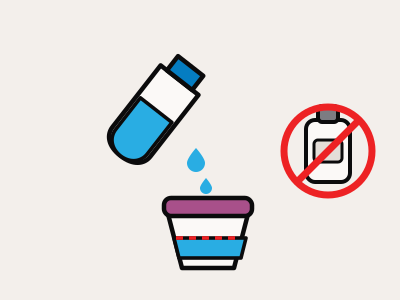
Never. No oils, no menthol preparations, no herbal additions, no extra medicine. Things that are harmless on skin can be seriously harmful in the lungs.
Should I use it during an asthma attack or go to hospital?
Follow the written asthma plan you were given. In general: give the reliever, and if there is no clear improvement within a few minutes, or any severe sign, go. Do not repeat doses at home hoping it will turn around.
The mist smells odd.
Stop and inspect. A smell usually means the equipment needs cleaning or replacing. Do not keep using it.
Next
Other guides.
Counting breathing
The 60-second counter and the numbers that mean fast breathing.
Count with meInfection control
Handwashing that works, and how to handle visitors.
Read the guideBack to school
Asthma plans, inhalers at school, and what travels around a classroom.
Read moreAsk a question
Real questions from Nigerian mums, answered properly.
Browse questionsIf breathing is the problem, come in first.
If this is an emergency, do not message or book — come straight in, or go to the nearest emergency department. Do not drive yourself. Call +234 809 016 0175.